
Why Eurasian Tree Sparrows Are Disappearing From Homes
Discover why Eurasian Tree Sparrows are becoming rare in Punjabi homes. Learn about habitat loss, pesticides, urbanization, and how we can help bring sparrows back. For generations, the familiar chirping of sparrows was an inseparable part of life in Punjabi homes. These tiny birds flew through courtyards, rested on mud walls, built nests under rooftops, and searched for grains around human settlements.
Among these birds, the Eurasian Tree Sparrow (Passer montanus) was once one of the most common visitors in villages and cities across Punjab.
However, the scene has changed dramatically. The cheerful “chirp-chirp” that once filled mornings has become increasingly rare. Many children today grow up without ever seeing a sparrow nest outside their homes.
So, what happened to this small but beloved bird?
The disappearance of sparrows is not caused by a single factor. Instead, a combination of habitat destruction, declining food sources, urban development, and environmental changes has made survival increasingly difficult for these birds.
Why Are Eurasian Tree Sparrows Disappearing?
1. Loss of Natural Nesting Spaces
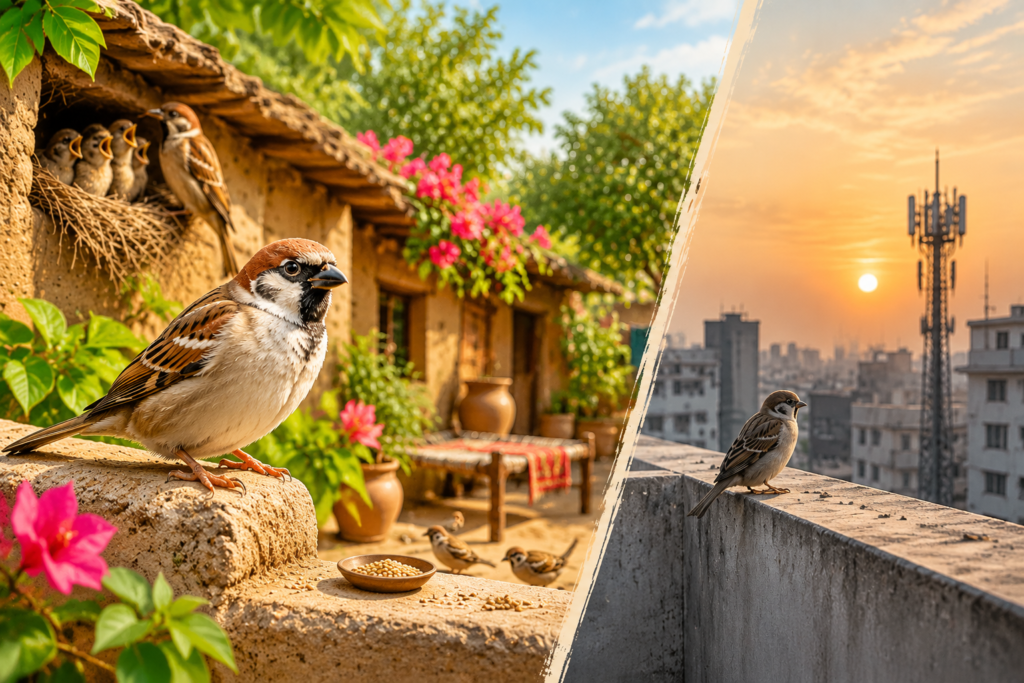
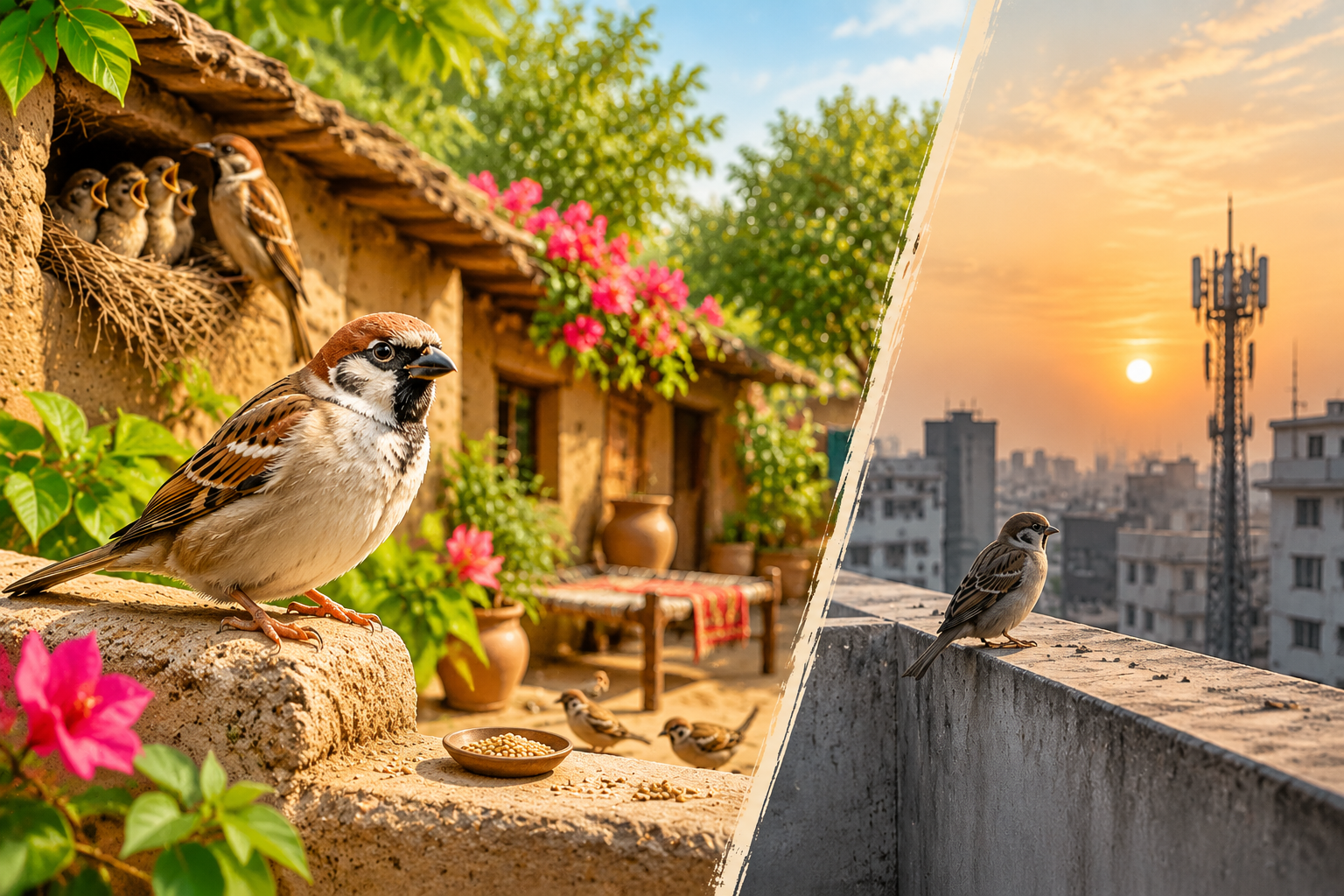
Traditional Punjabi houses were surprisingly friendly to birds. Homes built with mud walls, wooden beams, open windows, and roof gaps provided perfect spaces for sparrows to build their nests.
Modern buildings, however, have changed this environment completely.
Smooth concrete walls, sealed windows, glass buildings, and closed ventilation systems leave almost no natural nesting cavities.
As a result, many sparrows struggle to find safe places to raise their chicks.
No nesting space means fewer sparrows.
2. Decline in Insects: A Hidden Threat to Sparrow Survival
Many people assume sparrows survive only on grains, but insects play a critical role—especially for young chicks.
Baby sparrows require protein-rich insects for proper growth and development.
Unfortunately, excessive pesticide use in agricultural fields, gardens, and urban areas has reduced insect populations significantly.
Fields that were once full of butterflies, insects, and small creatures have become much quieter.
With fewer insects available, sparrows have fewer chances to successfully raise their young.
3. Electromagnetic Pollution: A Possible Environmental Factor
The rapid increase of mobile towers and wireless technology has raised questions about the impact of electromagnetic radiation (EMR) on birds.
Some researchers and environmental groups suggest that electromagnetic pollution may affect bird behavior, navigation, and reproduction.
Although scientists are still studying this connection, many believe it could be one of several pressures affecting already declining sparrow populations.
4. Rapid Urbanization and Loss of Green Spaces
Cities and towns across Punjab have expanded rapidly over recent decades.
Open fields, gardens, and traditional green areas have been replaced with:
- Concrete buildings
- Roads
- Parking areas
- Modern housing societies
Native plants that once provided seeds and insects for birds are disappearing.
Since sparrows depend on seeds, grains, insects, and vegetation, modern urban landscapes often fail to provide enough resources for their survival.
5. Changing Food Habits and Modern Kitchens
In the past, households stored grains openly and cleaned wheat, rice, and other crops in open courtyards.
Sparrows benefited from these everyday activities by feeding on scattered grains and leftovers.
Today, food is stored in sealed containers, kitchens are mostly indoors, and traditional outdoor spaces are disappearing.
The small food opportunities that once supported sparrow populations have slowly vanished.
6. Growing Threat From Urban Predators
Modern urban environments have also increased threats from predators.
Domestic cats, crows, kites, and other animals can attack sparrow eggs and young chicks.
When nesting areas are already limited, increased predation makes it even harder for sparrows to reproduce successfully.
Can We Bring Sparrows Back?
The decline of sparrows is worrying, but it is not irreversible. Small actions by individuals and communities can make a real difference.
Here are simple ways to help:
- Install sparrow nesting boxes on balconies and rooftops
- Plant native flowers and shrubs that attract insects
- Keep a small bowl of fresh water for birds
- Provide grains through bird feeders
- Reduce unnecessary pesticide use
- Create bird-friendly neighborhoods through community projects like “Ghar Ghar Chidiya”
Even small changes in our homes can create safe spaces for these birds again.
The Eurasian Tree Sparrow: A Symbol of Environmental Health
The Eurasian Tree Sparrow is more than just a small bird. Its disappearance reflects larger environmental changes happening around us.
A declining sparrow population indicates:
- Loss of biodiversity
- Reduced insect populations
- Habitat destruction
- Imbalance in local ecosystems
These birds once lived alongside humans because our homes and lifestyles naturally supported them.
If we want future generations to experience the joy of waking up to sparrow songs, we must protect the spaces where these tiny visitors can survive.
The return of the sparrow begins with small actions one nest box, one garden, and one caring household at a time.