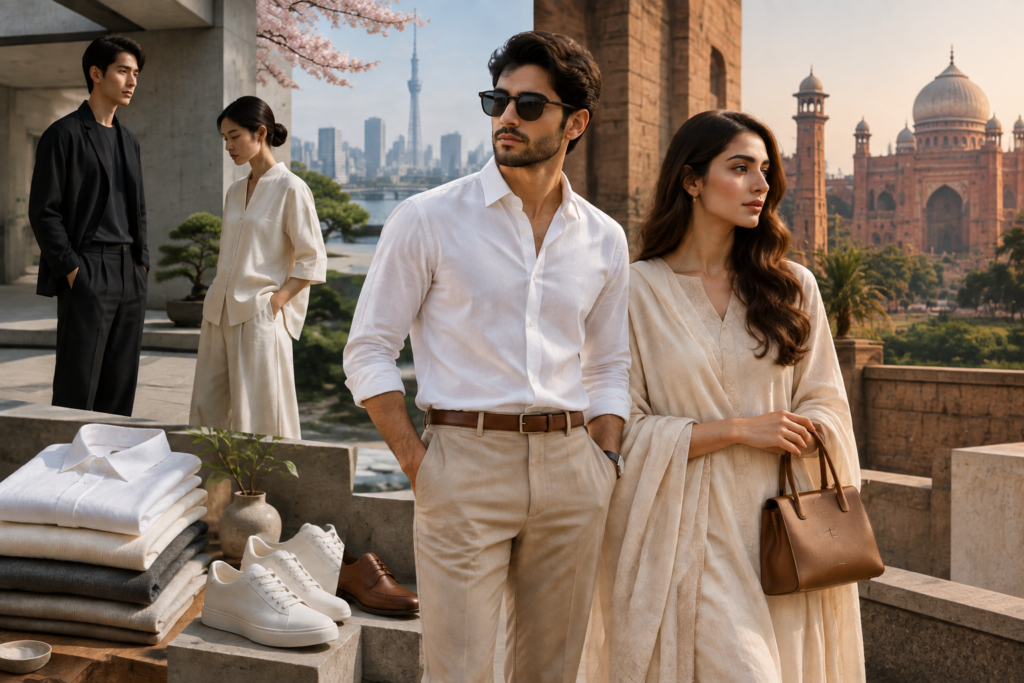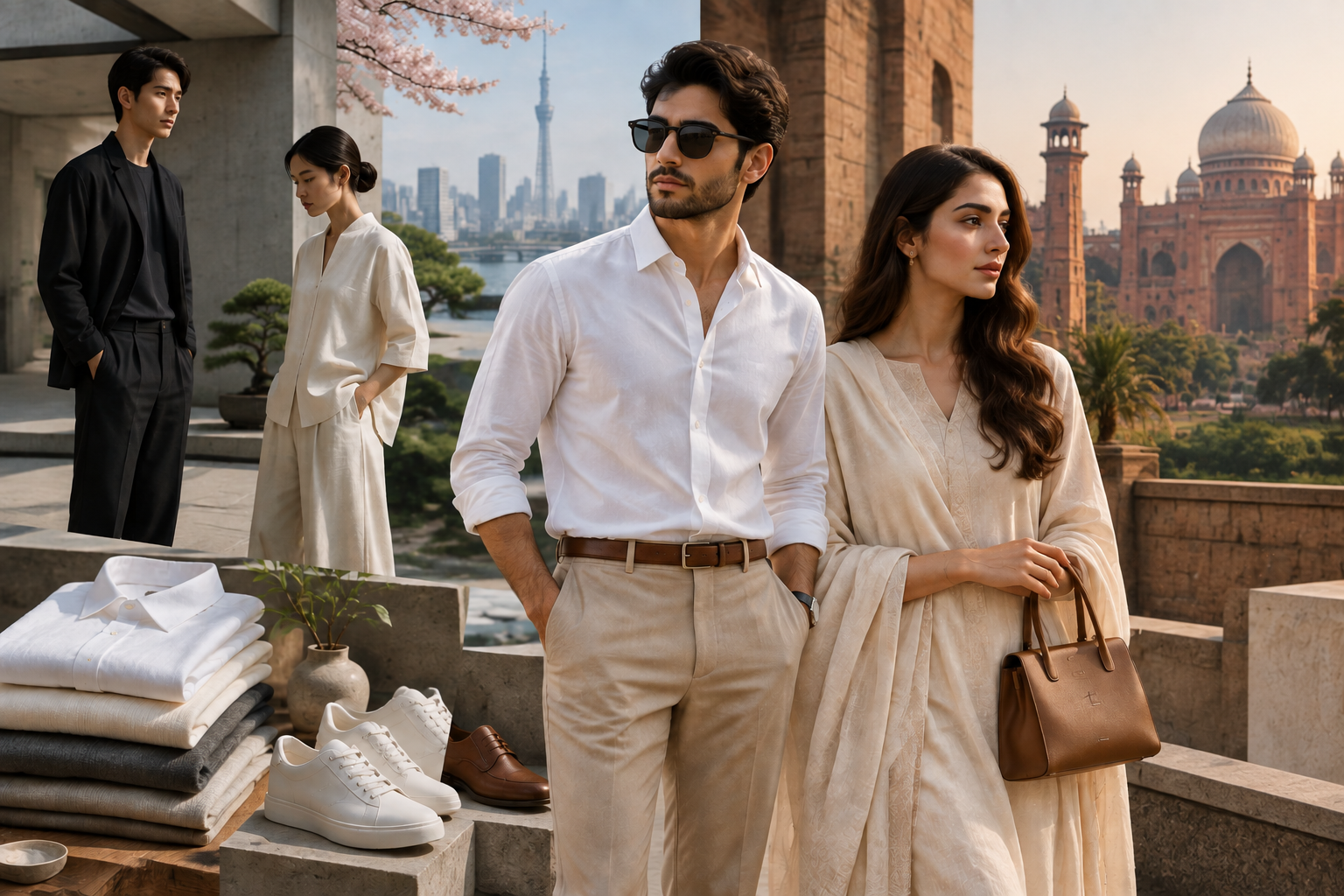

For decades, luxury fashion was associated with visible status symbols: large logos, designer monograms, expensive watches, and clothing that immediately announced the brand name. But a new fashion philosophy is changing the way people understand elegance.
The trend is called “quiet luxury” a style based on simplicity, high-quality fabrics, perfect fitting, and subtle design rather than obvious branding. A plain white shirt with excellent fabric and tailoring can represent more luxury than a shirt covered with logos.
Today, this movement is influencing fashion-conscious people in India and Pakistan, where traditional ideas of showing wealth are slowly meeting a new appreciation for minimalism.
The Japanese Influence: When Less Became More
Although quiet luxury became globally popular in recent years, many of its principles have deep connections with Japanese design culture.
Japanese companies and designers have long promoted the idea that products should focus on quality, function, and simplicity rather than excessive decoration. Brands such as MUJI became famous for their “no-logo” philosophy, clean designs, natural materials, and practical everyday clothing.
Similarly, Japanese fashion brands such as Uniqlo built their identity around simple, functional clothing known as “LifeWear” — everyday pieces designed around comfort, quality, and long-term use rather than short-lived trends.
Japanese minimalism changed the question people asked about clothes.
Instead of:
“How expensive is this brand?”
The question became:
“How good is this fabric? How well does it fit? How long will it last?”
From Big Logos to Invisible Luxury
The quiet luxury movement rejects the idea that wealth must be displayed loudly.
A traditional luxury shirt might have:
- A large designer logo
- Bright patterns
- Obvious branding
A quiet luxury shirt usually has:
- No visible logo
- Premium cotton or linen
- Neutral colors
- Clean stitching
- Perfect fitting
- Timeless design
The wearer wants people to notice the person, not the brand.
This philosophy is also connected with the global rise of “stealth wealth” fashion that communicates refinement without obvious signs of money.
Why India and Pakistan Are Embracing Quiet Luxury
India and Pakistan have traditionally valued fashion as a way of expressing success.
From embroidered sherwanis to designer suits and branded clothing, visible fashion has always played an important social role.
However, younger generations are increasingly moving toward a different idea:
Confidence does not require a logo.
Several factors are driving this change:
1. Global Social Media Influence
Platforms like Instagram, TikTok, and Pinterest have introduced Indian and Pakistani audiences to international fashion aesthetics.
Young professionals now see styles from:
- Tokyo
- Seoul
- Milan
- London
- New York
Minimal outfits featuring simple shirts, trousers, watches, and leather shoes are becoming symbols of modern sophistication.
2. Professional Lifestyle Changes
As more people enter corporate jobs, entrepreneurship, technology, and international workplaces, fashion preferences are changing.
A simple:
- white Oxford shirt
- beige trousers
- leather belt
- clean sneakers
can work in many professional environments.
The focus is shifting from “looking expensive” to “looking refined.”
3. A Reaction Against Fast Fashion
Many consumers are becoming tired of buying clothes that quickly lose appeal.
Quiet luxury encourages:
- fewer clothes
- better quality
- longer use
- timeless designs
Instead of buying ten trendy shirts, someone may prefer two or three high-quality shirts that last years.
What Quiet Luxury Looks Like in India and Pakistan
The trend does not mean copying European or Japanese wardrobes completely. South Asian fashion can adapt the philosophy.
Examples:
Men’s Fashion
Instead of:
- Large brand logos
- Shiny fabrics
- Excessive patterns
Quiet luxury style:
- Plain cotton shirts
- Well-fitted trousers
- Linen kurtas
- Neutral-colored waistcoats
- Quality leather shoes
- Minimal watches
Women’s Fashion
Quiet luxury can appear through:
- Elegant solid-color suits
- High-quality fabrics
- Simple embroidery
- Classic handbags
- Minimal jewellery
- Clean silhouettes
The idea is not expensive clothing it is thoughtful clothing.
The Future of Fashion: Status Through Simplicity
The biggest change brought by quiet luxury is psychological.
In the past, fashion often said:
“Look at what I own.”
Quiet luxury says:
“Notice how I carry myself.”
A person wearing a plain shirt without a logo may actually be making a stronger fashion statement because the focus moves from branding to personality, confidence, and taste.
Japanese design culture helped popularize this idea: simplicity can be sophisticated, and restraint can be powerful.
For India and Pakistan, quiet luxury represents a new chapter in fashion where elegance is no longer about showing more, but about choosing better.