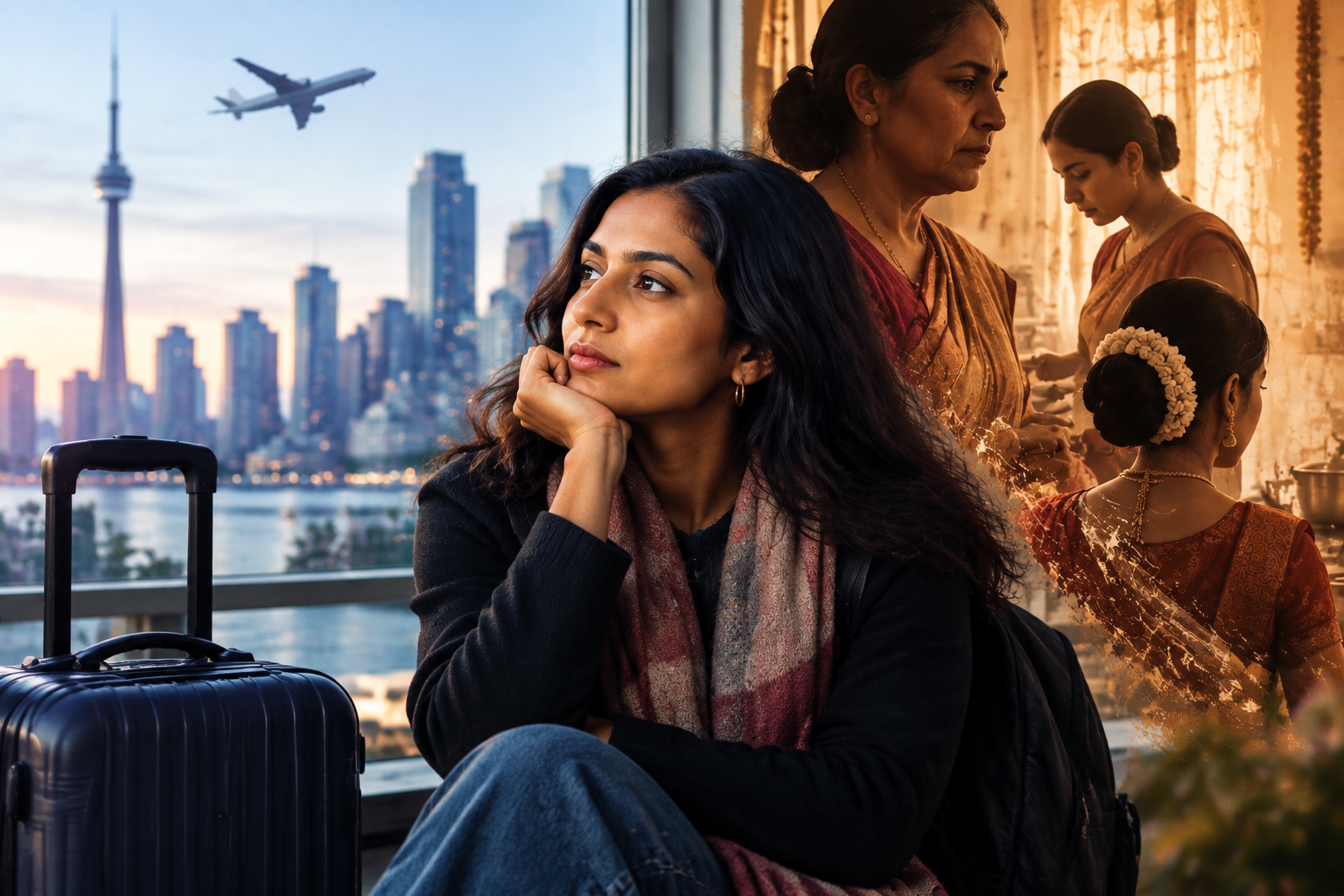

Migration is often described as a journey toward a better life. For many South Asian women, moving to a foreign country represents new opportunities, financial independence, better education, and the chance to experience a different society. The image of life abroad is often connected with freedom and progress.
However, the reality of migration is more complex. While many women successfully build independent lives overseas, others discover that moving to a new country does not always mean leaving behind traditional expectations. For some South Asian women, especially those who marry into South Asian families abroad, familiar cultural pressures can continue behind closed doors.
A new passport may change a person’s location, but changing deep-rooted social attitudes can take much longer.
The Migration Dream and the Reality Behind It
For decades, countries such as the United States, Canada, the United Kingdom, Australia, and European nations have been viewed by many South Asians as places of opportunity. Families often imagine that their daughters will have access to better education, careers, and personal freedom after moving abroad.
Many women do experience these opportunities. They pursue professional careers, become financially independent, and create identities beyond traditional family roles.
However, migration also brings challenges that are rarely discussed. Some women face loneliness, cultural adjustment, language barriers, dependence on spouses, and pressure to maintain traditional family expectations while adapting to a completely different society.
The experience of every immigrant woman is different, but one common challenge is balancing personal aspirations with cultural expectations.
When Marriage Abroad Does Not Always Mean Freedom
For some South Asian women, marriage becomes the main pathway through which they migrate. They may move abroad after marrying someone who already lives in another country.
From the outside, such marriages may appear to offer a new beginning. However, some women find that they enter households where traditional gender roles remain strongly practiced, even though they are now living in a modern society.
A woman may physically move from Pakistan, India, Bangladesh, or another South Asian country to a Western country, but inside her home she may still face expectations similar to those found in more traditional environments.
These expectations can include:
- Being expected to prioritize household responsibilities over personal ambitions.
- Facing pressure to follow decisions made by elders or family members.
- Limited freedom in social activities or friendships.
- Expectations to maintain traditional roles as a wife and daughter-in-law.
- Pressure to raise children according to strict cultural rules.
The country may have changed, but the family structure and mindset may remain the same.
The Continuation of Patriarchal Values Abroad
Patriarchy is not limited to a particular country or region. Social attitudes can travel with communities when people migrate.
Some South Asian families abroad preserve strong connections with their cultural traditions. Maintaining language, food, religion, and family values can help immigrants maintain their identity. However, in some cases, traditional gender expectations may also continue.
For some women, this creates a difficult situation. They are surrounded by a society that encourages individual freedom and equality, but within their own families they may experience expectations based on older ideas about women’s roles.
This creates a conflict between two worlds:
- The outside society encourages independence.
- The family environment may prioritize obedience and traditional roles.
Living between these two realities can create emotional stress and confusion.
The Pressure of Being the “Perfect” South Asian Woman
Many South Asian women abroad experience pressure to meet multiple expectations at the same time.
They are often expected to:
- Be successful in the outside world.
- Maintain traditional family values.
- Take care of household responsibilities.
- Respect elders without questioning decisions.
- Raise children according to cultural expectations.
- Represent their community positively.
This balancing act can become exhausting. Some women feel that they must constantly prove themselves in both societies: accepted by their new country while remaining loyal to their cultural background.
Financial Independence and Hidden Dependence
One of the biggest factors affecting immigrant women’s experiences is financial independence.
Women who have access to education, employment, and their own income often have greater freedom to make personal decisions.
However, some women who migrate through marriage may initially depend completely on their husbands for finances, immigration status, transportation, and social connections. This dependence can make it harder for them to challenge unfair situations or pursue their own goals.
The ability to build an independent life often depends on access to education, work opportunities, social support, and knowledge of their rights.
The Silent Struggle of Isolation
Another hidden challenge is loneliness.
Moving to another country often means leaving behind parents, siblings, friends, and familiar communities. For women who enter a new family after marriage, the adjustment can be especially difficult.
Some women may have limited social networks and may spend years trying to build connections outside their homes. The pressure to adapt quickly while dealing with homesickness can affect emotional well-being.
The struggle is not always visible because many women continue to fulfill their responsibilities while quietly dealing with personal challenges.
A New Generation Challenging Old Ideas
Despite these challenges, many South Asian women abroad are creating new paths. They are becoming entrepreneurs, professionals, researchers, artists, and community leaders.
Younger generations are also questioning traditional ideas about marriage, gender roles, and family responsibilities. Many families are finding ways to preserve cultural identity while also supporting women’s independence.
The conversation is gradually changing from “choosing between culture and freedom” to finding a balance where both can exist.
Migration Changes Places, But People Change Mindsets
Migration can open doors, but true change requires more than crossing borders. A new country can provide opportunities, but equality and independence also depend on family attitudes, social support, and personal empowerment.
For many South Asian women, life abroad is a story of courage and adaptation. Some find freedom and new opportunities, while others continue to face traditional expectations in unfamiliar surroundings.
The important conversation is not about blaming cultures or communities but about understanding the experiences of women who live between different worlds. Their stories reveal that migration is not only a physical journey it is also a journey of identity, independence, and transformation.