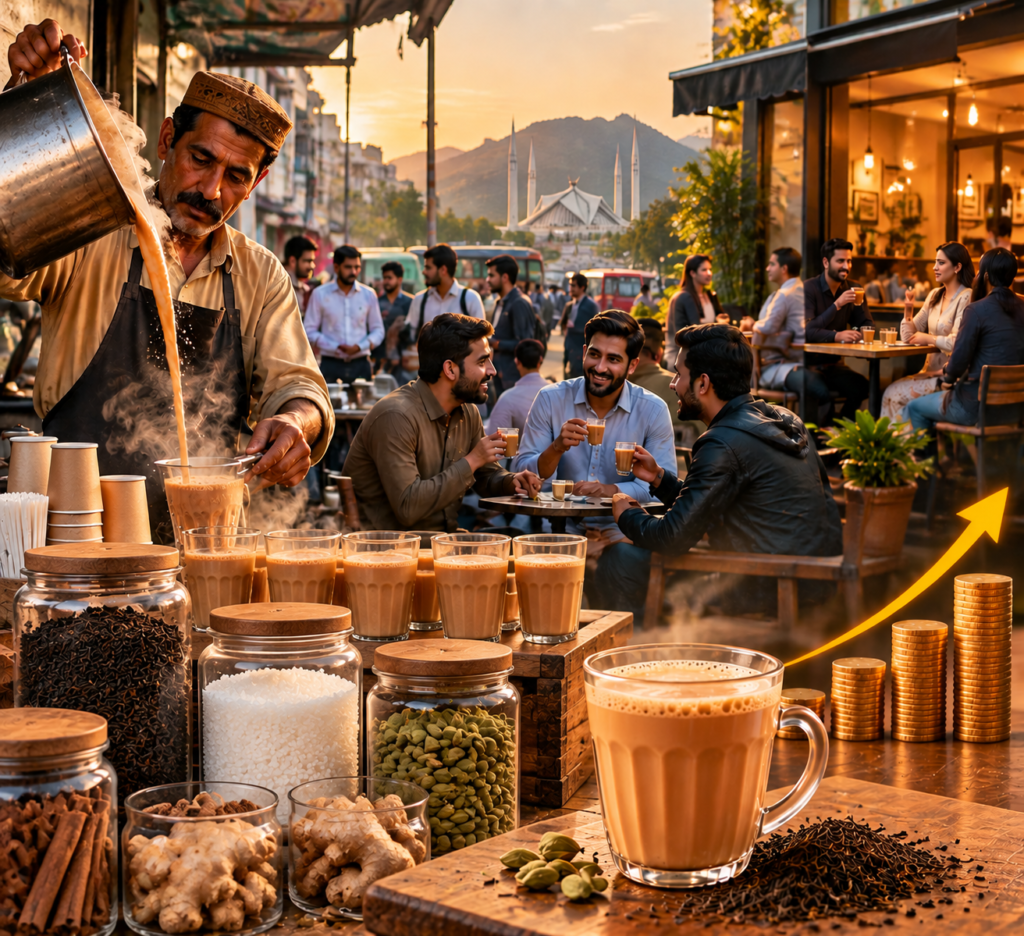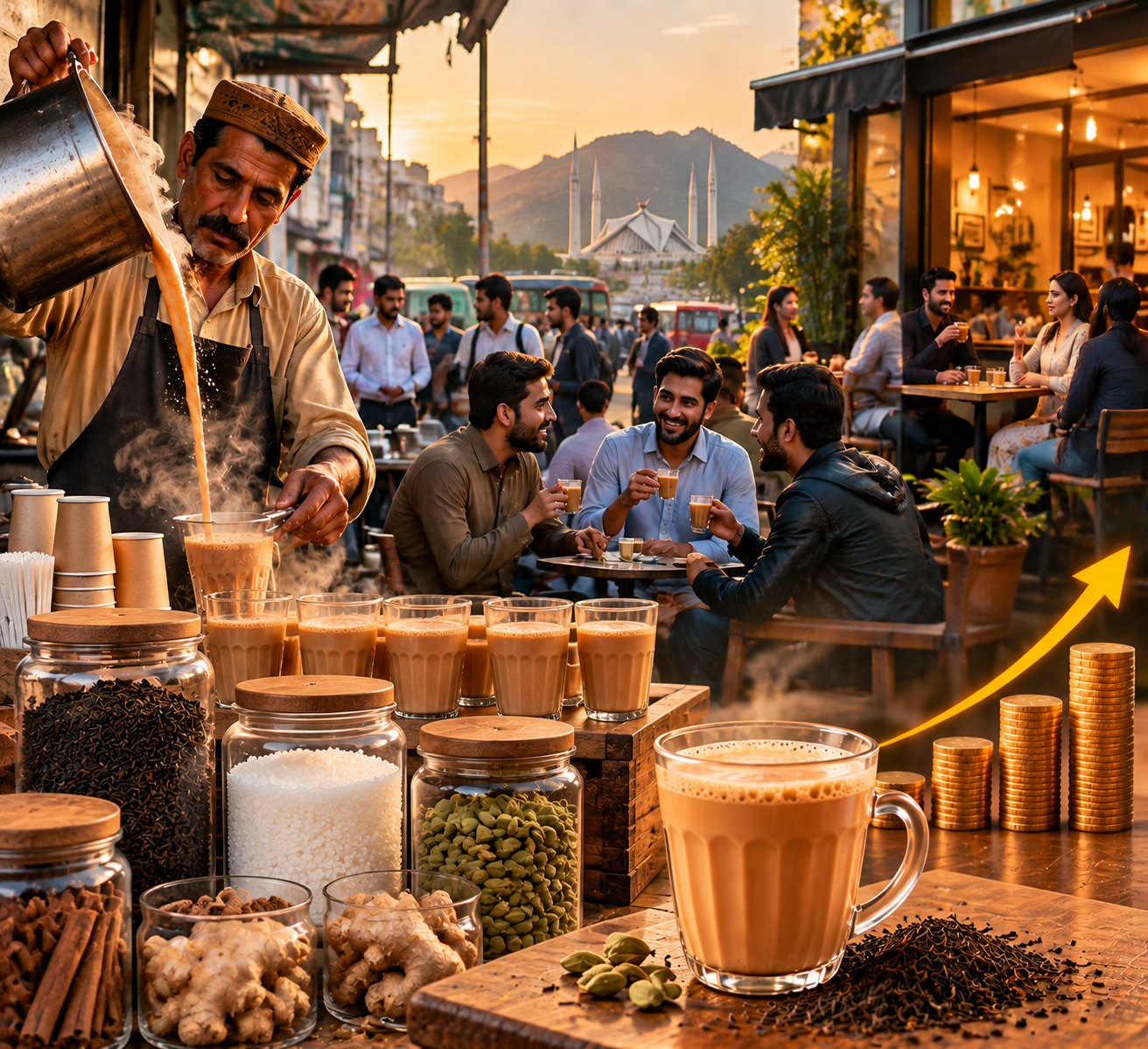

How Pakistan’s Chai Business Makes Money From One Cup.
Explore the business model behind Pakistan’s tea stalls. Learn how a Rs. 60–80 cup of chai, customer habits, location, and smart strategies can create a profitable business.
From a Simple Cup of Chai to a Successful Business: The Economics Behind Pakistan’s Tea Culture
In Pakistan, tea is not just a drink it is a daily habit, a social tradition, and an important part of everyday life.
From roadside dhabas to modern cafes, millions of Pakistanis start their day with chai. Friends meet over tea, office workers take tea breaks, and families serve tea to guests as a sign of hospitality.
A cup of chai that once cost only a few rupees has now become a Rs. 60–80 product in many places. But behind this small cup lies an interesting business opportunity.
The real question is:
How can a simple cup of tea create a sustainable business?
The Simple Mathematics of a Pakistani Chai Business
Imagine a tea seller selling one cup of chai for Rs. 70.
If the seller sells:
- 100 cups daily = Rs. 7,000 revenue
- 200 cups daily = Rs. 14,000 revenue
- 500 cups daily = Rs. 35,000 revenue
At first, these numbers seem impressive. But revenue is not the same as profit.
A business owner must consider:
- Milk cost
- Tea leaves
- Sugar
- Gas/electricity
- Cups
- Rent
- Staff salary
- Maintenance
The real profit comes from managing costs and increasing daily customers.
Why Chai Has a Powerful Business Advantage
Many businesses struggle because customers buy occasionally.
A clothing store may have customers once every few months.
A restaurant customer may visit once a week.
But chai has a unique advantage:
People can drink it every day.
A customer who likes a tea stall may return:
- Every morning
- During office breaks
- In the evening
- While meeting friends
This creates something every business wants:
Repeat customers.
Location: The Secret Ingredient Behind Successful Chai Businesses
The best tea is not always the reason customers choose a shop.
Often, the biggest factor is location.
A tea stall near:
- Offices
- Universities
- Markets
- Bus stops
- Factories
- Busy roads
can attract hundreds of customers because people are already passing through that area.
A simple tea stall in the right location can outperform an expensive café in the wrong location.
Why Some Chai Sellers Earn More Than Others
Pakistan has thousands of tea sellers, but their income levels are very different.
The difference is usually not only the tea recipe.
Successful chai businesses focus on:
1. Taste Consistency
Customers return when they know the taste will remain the same every day.
2. Speed of Service
People often drink tea during short breaks. Faster service means more customers.
3. Clean Environment
Even roadside customers appreciate cleanliness and good presentation.
4. Customer Relationship
Many successful tea sellers know their regular customers personally.
A friendly relationship creates loyalty.
The Difference Between Selling Chai and Building a Brand
A small tea seller may think:
“I need to sell more cups today.”
A business-minded entrepreneur thinks:
“How can I turn this chai into a recognizable brand?”
A chai business can expand through:
- Multiple branches
- Better packaging
- Special tea varieties
- Snacks with tea
- Online delivery
- Franchise models
The product is simple, but the business model can become bigger.
Why Chai Businesses Remain Strong in Difficult Times
Economic conditions affect many industries.
However, tea remains popular because it is an affordable comfort product.
People may reduce spending on expensive entertainment, but many still continue their daily chai habit.
This makes tea businesses relatively stable compared with many luxury-focused businesses.
Lessons Entrepreneurs Can Learn From Pakistan’s Chai Culture
The chai business teaches important lessons:
1. Small Products Can Create Big Opportunities
A business does not always need an expensive product.
2. Daily Demand Is Powerful
Products people need regularly can create stable income.
3. Customer Experience Matters
Good service can turn a first-time buyer into a lifelong customer.
4. Scale Comes From Systems
The biggest opportunity is not selling one cup — it is creating a system that can sell thousands of cups.
Conclusion: Pakistan’s Chai Is More Than a Drink
A cup of chai may look simple, but it represents one of the oldest lessons in business:
Understand people, solve a daily need, and build trust.
From a small roadside stall to a growing café chain, the journey often begins with the same thing one customer and one cup of tea.
Pakistan’s chai culture proves that sometimes the biggest business opportunities are hidden inside the simplest ideas.