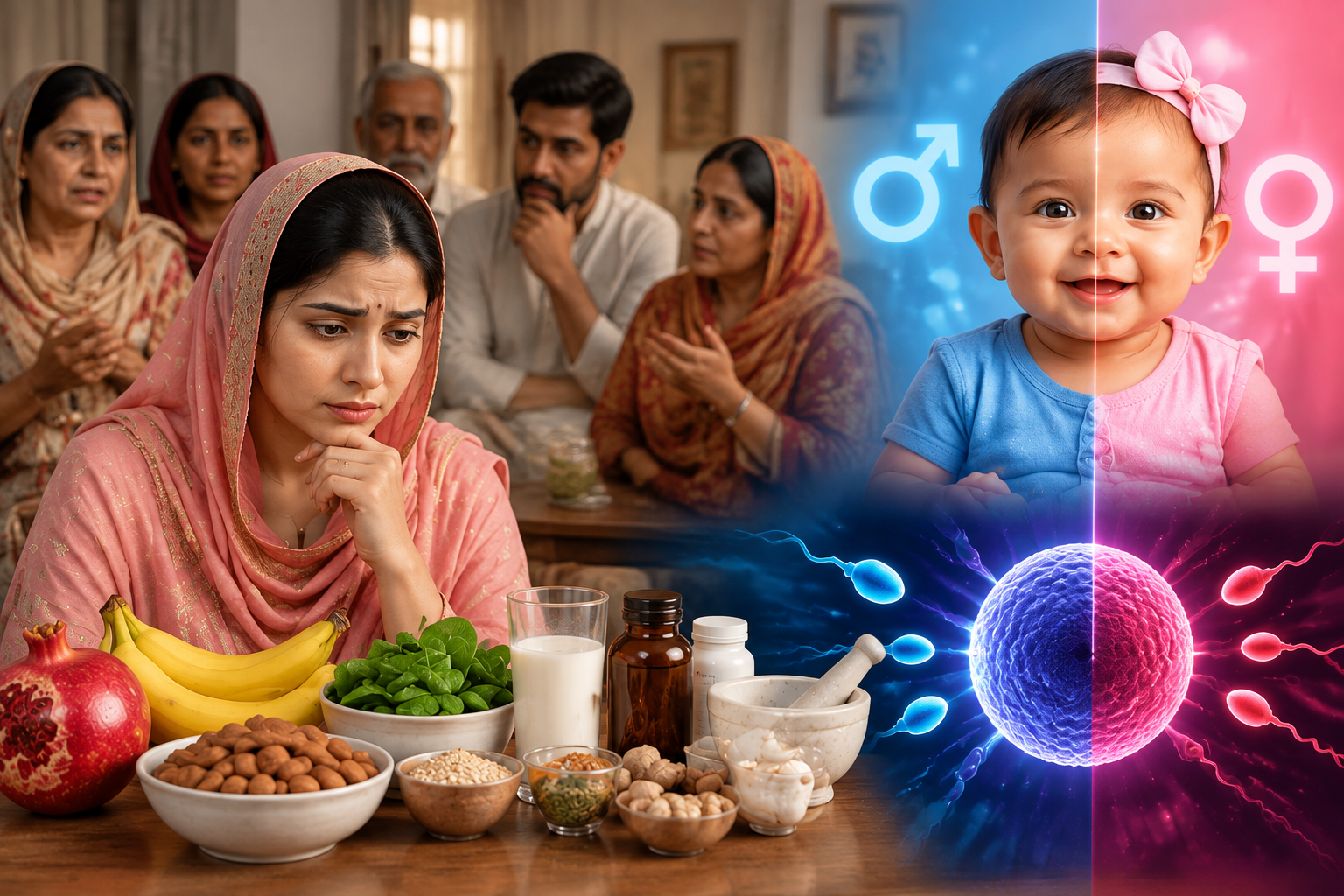

Can Diet Really Choose a Boy or Girl? The Science Behind Fertility Misinformation
Explore common South Asian fertility myths about choosing a baby’s gender through diet, herbal remedies, and traditional claims. Learn what science says about X and Y sperm selection.
When Tradition Meets Fertility Misinformation
Across South Asian communities, including Pakistan, India, Bangladesh, and other Desi cultures, the desire for a baby boy has historically been influenced by social traditions, family expectations, and cultural beliefs.
Because of this pressure, many couples become vulnerable to misinformation about gender selection. From special diets and herbal remedies to “guaranteed boy formulas,” countless claims circulate on social media and through unverified health practitioners.
One common claim suggests that if a woman eats a specific diet after intercourse, she can influence whether an X or Y chromosome sperm fertilizes the egg supposedly allowing her to choose between having a baby boy or girl.
Although these claims may sound scientific, they are not supported by reproductive biology.
The Desi Obsession With Baby Gender: How Myths Spread
In many South Asian families, having a son has traditionally been associated with:
- carrying the family name
- supporting parents in old age
- continuing family traditions
- social status
Although attitudes are changing among younger generations, gender preference still exists in some communities.
This cultural environment creates opportunities for misinformation to spread. People searching for ways to influence their baby’s gender may believe claims from:
- unqualified herbalists
- social media influencers
- traditional healers
- online sellers of fertility products
A person confidently explaining biology with words like “chromosomes,” “sperm strength,” or “special nutrition” may appear convincing, even when the information is scientifically incorrect.
The Claim: “Eat This Diet to Have a Baby Boy”
A common Desi fertility myth claims:
“If a woman eats a Y chromosome-supporting diet, Y sperm will reach the egg first and a baby boy will be born.”
Some people claim foods containing certain nutrients, especially sugars like fructose, can improve the chances of Y chromosome sperm.
However, this explanation misunderstands how fertilization works.
Food does not direct sperm toward the egg based on whether it carries an X or Y chromosome.
A woman’s diet cannot create a biological filter that allows only Y sperm or X sperm to fertilize the egg.
How Baby Gender Is Actually Determined
The biological sex of a baby is determined during fertilization.
The mother’s egg always carries an X chromosome.
The father’s sperm carries either:
- X chromosome → XX combination (typically female)
- Y chromosome → XY combination (typically male)
Therefore, the sperm determines whether the embryo receives XX or XY chromosomes.
The process happens naturally and cannot be controlled by eating specific foods, drinking herbal mixtures, or following traditional “boy or girl” diets.
The Fructose Myth: A Scientific Misinterpretation
One frequently repeated claim is:
“Y sperm need fructose, so increasing fructose intake helps produce boys.”
This is incorrect.
Fructose is naturally present in seminal fluid, where it provides energy that helps sperm movement. It is already available when sperm enters the female reproductive system.
Eating more fructose does not selectively strengthen Y chromosome sperm or increase the chance of a male pregnancy.
A naturally occurring substance in the reproductive system does not mean consuming extra amounts will control fertilization.
Herbal Syrups and Fertility Products: Where the Problem Begins
A major concern is when misinformation becomes a business model.
Some sellers promote:
- fertility syrups
- herbal powders
- special supplements
- “male child guarantee” products
by making promises that have no scientific foundation.
People who desperately want a son may spend significant money hoping these products will work.
The issue is not traditional medicine itself — many cultures have valuable traditional practices — but making medical claims without evidence and presenting unproven products as guaranteed treatments.
Can Doctors Select X or Y Sperm?
Scientific sperm-selection techniques do exist, but they are completely different from dietary methods.
Medical reproductive technologies involve:
- controlled laboratory environments
- specialized equipment
- trained fertility specialists
- advanced procedures
These methods are not comparable to drinking a syrup or changing food habits.
Why Medical Misinformation Is Dangerous in South Asian Communities
Fertility misinformation can have serious consequences.
It may lead to:
Emotional Pressure on Women
Women are often unfairly blamed for the baby’s gender, despite the fact that the egg always contributes an X chromosome.
Financial Exploitation
Families may spend money on ineffective products because they believe they are buying a solution.
Delayed Medical Care
Couples may avoid proper fertility consultation while trying unproven remedies.
How Desi Families Can Protect Themselves From Fertility Myths
Before believing any fertility claim:
Check Medical Qualifications
Ask whether the person has recognized medical training in reproductive health.
Look for Scientific Evidence
A claim should be supported by research, not only personal experiences or success stories.
Be Careful With Guarantees
Statements like:
- “100% baby boy guarantee”
- “Choose your baby gender naturally”
- “Special formula for male child”
should immediately raise questions.
Respect Natural Biology
A child’s value is not determined by gender. Healthy pregnancies and healthy babies should always be the priority.
Science Should Guide Fertility Decisions, Not Myths
South Asian societies have rich traditions and cultural values, but reproductive health decisions should be based on scientific evidence rather than misinformation.
A special diet cannot select X or Y sperm. Herbal syrups cannot guarantee a baby boy. Fertility is a complex biological process, not something controlled by secret recipes.
Respecting science, seeking qualified medical advice, and challenging harmful myths can help families make healthier and more informed decisions.
A confident explanation does not always mean a correct explanation evidence matters more than confidence.